
Adapting to kindergarten: the challenges facing the child and the parents
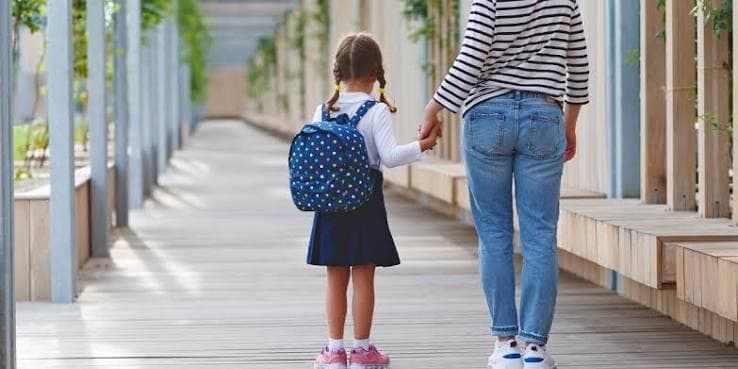
The transition of a young child from the home environment to kindergarten is considered the first significant transition in their educational journey. The kindergarten environment differs considerably from the family environment, both spatially and in the purposes it serves. Children are asked to face new spaces, different boundaries, and generally different ways of functioning. The points where the two environments converge, and those that set them apart, should be identified and recognised by both the teaching staff and the child’s family system.
When the time comes for a young child to begin their educational journey, anxieties, worries, expectations and questions often surface for parents regarding the child’s readiness to meet the demands of kindergarten. Specifically, they wonder whether the child will be able to adapt to the new environment, whether they will be able to follow rules, whether they will present behavioural problems, whether they will manage to acquire academic skills, and whether they will interact smoothly with their peer group.
According to research, a child’s school readiness is linked to their physical, social and emotional development, their level of language and communication, their way of learning, and their cognitive level. When we speak about a child’s adaptation, we take into account how well they manage to adapt within the classroom, as well as the strategies each individual child puts into practice during that process. The time each child needs in order to learn, experience, process and finally adapt to the new situation is different.
How can parents become companions on this new beginning and help their child through a smooth transition?
Parents’ worries and concerns are part of this new situation. They may recall their own first day at kindergarten, the feelings they had as children, the process of separating from their own parents. Parents need not rush to tuck these away in a corner of their mind or avoid them. Recognising these thoughts, these feelings, the possible anxiety or fear, matters for parents and children alike. We all passed through this step, and each of us experienced it uniquely.
Preparation is often a relief for both parent and child, as it offers a sense of predictability. Parents can talk with their child about what they will find at school, what they will do there, what games they will play, who their teacher will be, the separation from them and the reunion afterwards, once school is over.
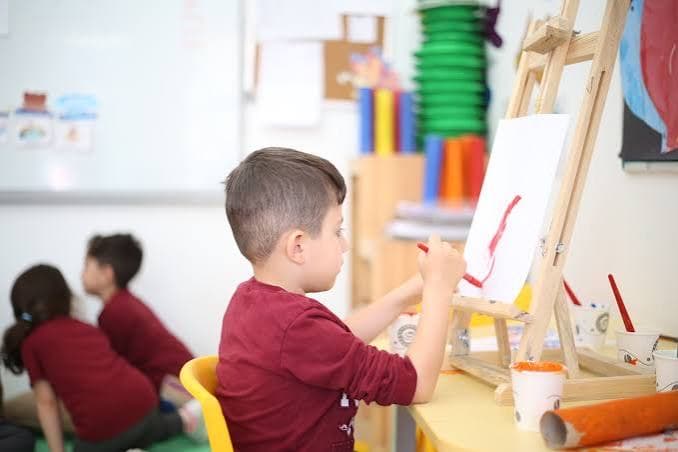
If possible, they can visit the school together with the child before the school year begins, so that the child can meet the teacher, see the classroom where they will spend the year, and become familiar with the environment.
Directness and honesty are the guide. The child will probably have questions and will express anxieties, worries and concerns about the new situation they are entering. Some children’s imaginings about what they will encounter are vague. It helps to give time and space for those questions to be asked, for all feelings to be expressed freely, and for the child to put into words everything that causes them fear or anticipation. If parents know the answer, they can share it with the child in a developmentally appropriate way. If they themselves do not have the full picture, they can say so too, and remain open to discovering, learning and getting to know.
The moment of separation matters. Every parent knows their own child and their needs best. It helps to have a routine established in advance between parent and child, so that the separation happens smoothly. It might be a kiss, a hug, the reassurance that they will meet again at midday, a personal, distinctive gesture the parents have developed with the child that gives them safety and confidence. Some children want to take a favourite object from home with them to school.
Communication between parents and teachers, contact with their own feelings, and availability towards their child in order to listen to and understand the experience the child is living, are the pillars for creating the conditions that promote smooth adaptation. They lay the ground for recognising any difficulties during the transition to school, and for finding ways to address them and support the child, so that they can live this experience while keeping their own uniqueness.
Ioanna Rannou — Clinical Psychologist, MSc.
References
- Fails Nelson, R. (2004). The transition to kindergarten. Early Childhood Education Journal, 32, 187–190.
- Griebel, W., & Niesel, R. (2002). Co-constructing transition into kindergarten and school by children, parents and teachers. Transitions in the early years, 64–75.
- McIntyre, L. L., Eckert, T. L., Fiese, B. H., DiGennaro, F. D., & Wildenger, L. K. (2007). Transition to kindergarten: Family experiences and involvement. Early Childhood Education Journal, 35, 83–88.
- Seung Lam, M., & Pollard, A. (2006). A conceptual framework for understanding children as agents in the transition from home to kindergarten. Early Years, 26(2), 123–141.